
By Brandy Simons, LADAC | Willow Grove Recovery
When he walked through our doors, he had nothing but the clothes on his back. He had a DCS case, pending charges, and a court that had already decided he could not safely parent his children. I have been doing this work long enough to recognize the weight of the moment. The odds stacked against someone before they have even started.
My name is Brandy Simons. I am a lead case manager at Willow Grove Recovery in Palmyra, Tennessee. I run our Parenting in Recovery program alongside my colleague Tarra Lyttle. This week, the father I just described walked out of a courtroom with custody of his children. The judge imposed a significantly more lenient sentence than anyone anticipated.
Without the client completing this program, those children would be in foster care.
I want to explain how that happened, because I think it matters for how we talk about recovery, parenting, and what treatment programs can actually do.
Tarra and I facilitate Parenting in Recovery classes every week. Our clients work through a structured curriculum covering healthy child development, communication, emotional regulation, household management, and relapse prevention through the lens of parenting. They complete a comprehensive workbook. They build a formal safety plan. When they finish, they receive a certificate and a letter I write directly to DCS and their legal representatives.
The paper trail is the point. It turns weeks of behavioral change into something a judge can hold in their hands.
I met with this client every week. I watched him do the work. He came in broken and left prepared. He completed every assignment. He engaged in every session. He did not perform recovery for the benefit of the court. He actually changed.
He also found something here I did not design into any curriculum. He worked on our cleaning crew. He spent time with our animals, feeding the goats and chickens, caring for something outside himself. He built friendships with other clients and with our staff. He wrote about it in his testimonial:
“I’ve enjoyed every minute of being here from growing as a person and a father, enjoyed feeding the goats and chickens, to running and working on the cleaning crew, also the family I developed.”
That word: family. He came in with no one and built something here. That matters clinically. A person who has experienced belonging is better equipped to provide it.
He also wrote this, about what helped him most:
“What helped the most was the staff here. I felt comfortable enough to open up and talk about my problems to the point where I gathered tools for my toolbox so I can take them in my recovery.”
A toolbox. That is what Tarra and I try to give every client. Concrete skills. Documented learning. Something they can carry out the door.
When he completed the program, I handed him his certification and his letter for DCS. I knew what was in that folder: every session, every assignment, every piece of evidence that this man had genuinely learned how to be a different kind of father.
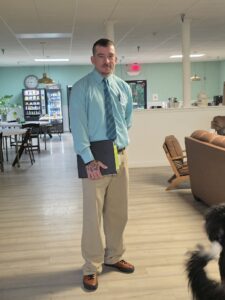
Christian showed up to the court room wearing a beautiful suit. He proudly showcased the completion of the course and shared what he learned. The judge was impressed with the safety plan, the workbook, and the curriculum he had completed with us. He granted Christian custody of his children.
Programs like ours remain uncommon. Most facilities focus solely on sobriety and leave clients without the documentation they need to fight for their families in court. The gap is real, and families pay for it.
We intend to expand this program. Tarra and I are tracking outcomes so we can demonstrate its effectiveness in family court cases across our client population.
But this week, none of that is abstract. A father has his children. A family stayed together because of documentation we built and a man who did the work to deserve it.
That is why I do this.
Brandy Simons is a Licensed Alcohol and Drug Counselor at Willow Grove Recovery Center in Palmyra, Tennessee. Willow Grove is a licensed substance use disorder and mental health treatment facility serving clients throughout the region.
